 (817) 975 0180
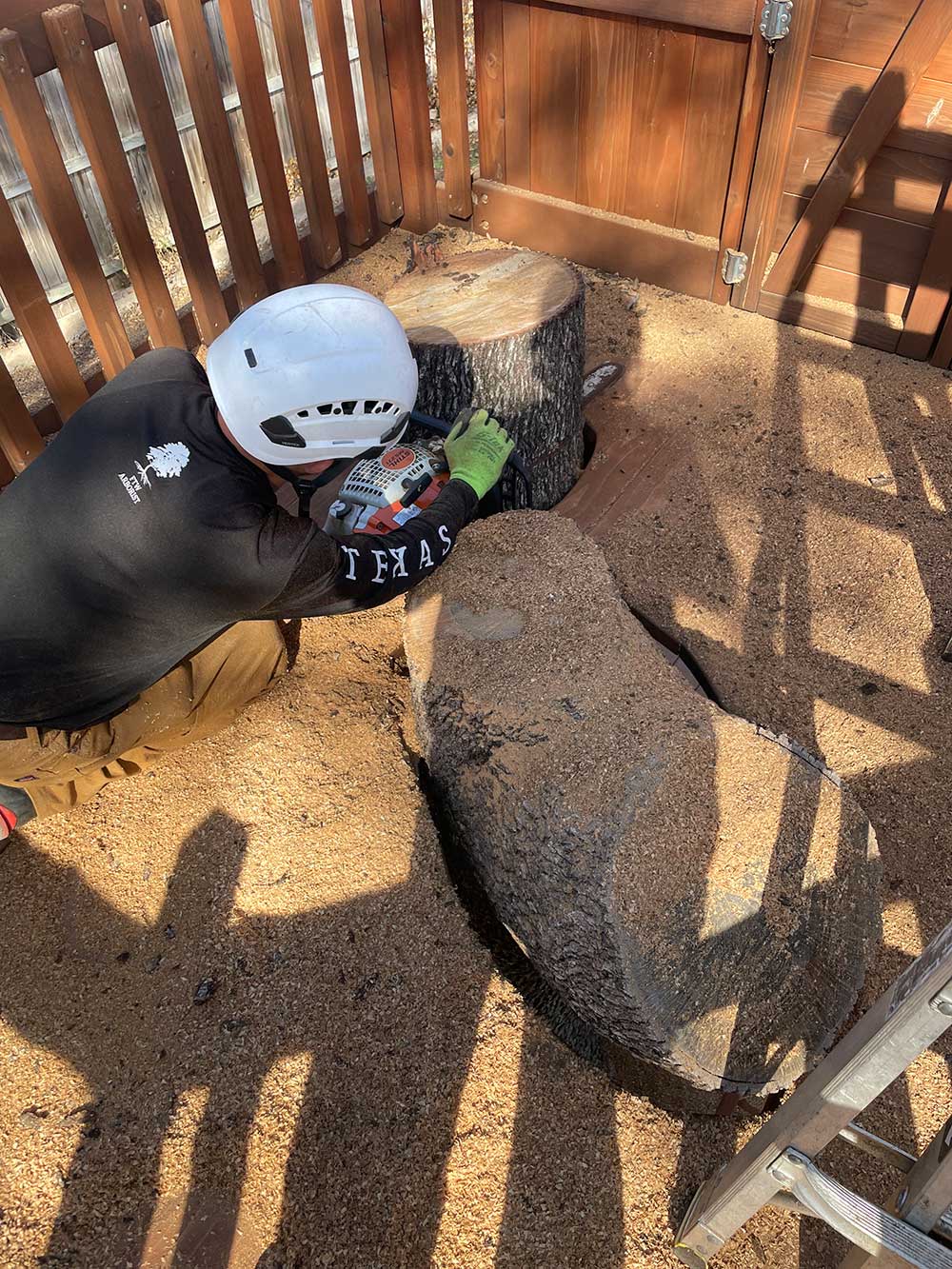
Summary: Stump grinding is faster, less invasive, and more affordable because it grinds the stump below ground level and leaves the roots to break down naturally. Stump removal takes out the stump and full root system, creating a clean slate for replanting or construction, but costs more and requires heavier equipment. The best choice depends on your plans, the stump size, and whether you want a quick fix or a long-term solution.
Got an ugly tree stump sticking out in your yard?
You’re not alone. We see many Forth Worth properties with leftover stumps. But if you have one in your yard, don’t ignore it. It’s not just an eyesore; it’s a tripping hazard and attracts pests that might affect your other plants.
Now, the big question is, should you grind the stump or remove it?
It depends on your goals, budget, and what you plan to do with the area. Stump grinding is a quick, more affordable, and less disruptive process. On the other hand, stump removal goes deeper (literally) and clears the root system for good.
| Tip: The U.S. Forest Products Lab notes that decaying wood underground can attract termites, carpenter ants, and fungi, making early action helpful rather than waiting for natural decomposition. (Source: fpl.fs.usda.gov) |
Let’s explore both options and figure out what’s best for your yard. Before we break down each method in detail, it helps to see how stump grinding and stump removal stack up side-by-side. This quick comparison will give you a clear idea of the differences in cost, time, yard impact, and long-term benefits.
Side-by-Side Comparison of Stump Grinding vs. Stump Removal:
| Feature | Stump Grinding | Stump Removal |
|---|---|---|
| Cost | More affordable | Higher cost due to excavation |
| Time Required | Usually completed in 1–2 hours | It can take several hours to a full day |
| Impact on Yard | Minimal disturbance; no large hole left behind | More invasive; requires refilling the excavation hole |
| Root System | Roots remain underground and gradually decompose | Entire stump and root system removed |
| Regrowth Potential | Possible with certain species like Chinese tallow or cottonwood | No regrowth once removed |
| Suitable For | Quick removal when you’re not planning to plant or build in the spot | Best when planning construction, landscaping, or replanting |
| Pest Concerns | Underground decay may still attract pests such as termites or carpenter ants (Source: USDA Forest Products Laboratory ) | Lower pest risk since no organic material remains |
| Cleanup Needed | Wood chips remain and may be reused as mulch (Texas A&M AgriLife Extension recommends keeping mulch 6 inches away from home foundations to avoid attracting pests.) | Requires backfill and soil leveling |
| Best Use Case | Homeowners looking for a fast and cost-effective solution | Long-term improvement where replanting or construction will occur |
What’s Stump Grinding?
Stump grinding is when you use a machine to grind the stump down below ground level. What’s left turns into wood chips or mulch. It’s a surface-level solution and ideal for most Fort Worth yards.
What to Expect
When you hire a tree care company, you can expect them to bring a stump grinder, a heavy machine on wheels with a sharp spinning disc. They’ll stump down about 4–6 inches below grade. The mulch stays behind unless you want it cleared. The process is clean, quick, and doesn’t tear up your yard.
| Fact: Grinding typically takes 1–3 hours, depending on stump size and wood density, according to arborist best-practice guidelines. |
| Pro Tip: If you plan to lay sod or plant grass quickly, grinding is usually enough. Just add topsoil over the mulch for smoother leveling. |
Stump Grinding: Pros and Cons for Fort Worth Homeowners
Stump grinding is a popular choice for Fort Worth homeowners who want an easy, quick fix for unwanted tree stumps. It involves using a machine to grind the stump down below soil level. While it’s fast and clean, there are still some drawbacks to think about, especially if you plan to replant or worry about pests.
| Quick Tip: For large yards with multiple stumps, grinding is usually 40–60% more affordable than complete removal. |
Pros of Stump Grinding
- Cost-Effective: Stump grinding usually costs less than digging out the whole stump. You save money on labor because the process takes less time and needs smaller equipment.
- Faster: Most grinding jobs can be finished in under a day, sometimes in just an hour or two. That makes it a great option if you need the stump cleared quickly for other work.
- Less Invasive: Grinding doesn’t tear up your yard. There’s no digging or large holes, so the surrounding garden beds, landscaping, and soil remain undisturbed.
- Produces Mulch: The leftover wood chips make great mulch for flower beds or walkways. It’s an easy way to recycle the stump into something useful.
- Reduces Hazards: Grinding brings the stump below ground level and removes this tripping hazard from your yard. It also reduces the risk of mower damage.
- Environmentally Friendly: Grinding leaves roots to break down naturally. It is a clean, green method that leaves a low carbon footprint and reduces the risk of soil disturbance.
| Tip: Texas A&M AgriLife Extension warns not to pile mulch against your home foundation, as it may attract termites. Keep a 6-inch clearance gap. |
Cons of Stump Grinding
- Roots Remain: Grinding only takes care of the stump itself. The root system stays underground and can take years to naturally rot away.
- Potential for Regrowth: Some tree species, like cottonwood or Chinese tallow, can sprout new shoots from the remaining roots. This means you might need to manage new growth later.
- Wood Chips Left Behind: While some people reuse the mulch, not everyone wants leftover chips in their yard. If you don’t want them, you’ll need to remove and dispose of them.
- Continued Pest Attraction: Decaying roots can still attract termites, ants, and fungi. While not as common as with an intact stump, the underground material can be a magnet for pests.
- Limitations for Replanting: You can’t plant a new tree in the exact same spot. The remaining roots and wood below the surface can interfere with the new tree’s growth.
What’s Stump Removal?
In comparison, stump removal is a bigger job. It involves pulling the entire stump and root system out of the ground. This gives your yard a clean slate but leaves behind a large pit.
What to Expect
For stump removal, you’ll need larger machinery, like backhoes or mini-excavators. The team will dig out the stump and roots using heavy equipment. They’ll haul it away and fill the hole with soil. It’s recommended for Fort Worth properties planning major landscaping or construction.
| Important: Texas law requires property owners or contractors to call Texas811 before digging to avoid utility line hazards. |
| Did You Know?: Stump removal is the only method that lets homeowners plant a new tree in the exact same spot without waiting years for old roots to decay. |
Stump Removal: Pros and Cons for Your Fort Worth Property
Stump removal gives your Fort Worth yard a fresh start, but it’s a bigger project compared to grinding. If you plan to remove an old tree and plant a new one in the same place, add a new landscaping feature, or want zero regrowth or pests, full removal may be worth the extra cost and effort.
Pros of Stump Removal
- Complete Solution: Stump removal pulls out the entire root system, not just the stump. You’re not leaving anything behind that could rot, attract pests, or cause future problems.
- Prevents Regrowth: Once the roots are gone, the tree can’t sprout again. You don’t have to worry about suckers popping up from underground roots like you do with grinding.
- Clean Slate: You’ll have an open, plantable space ready for sod, a garden, or construction. It’s the better choice if you’re planning big landscape changes.
- Eliminates All Hazards: With no underground roots or buried stump, there’s nothing left to shift, settle, or trip over. It removes safety risks entirely.
- No Pests: Pests like termites and ants are drawn to decaying wood. Stump removal clears the source and keeps your Fort Worth property less attractive to bugs.
Cons of Stump Removal
- More Expensive: Because it takes more time, labor, and heavy machinery, full removal costs more than stump grinding.
- Time-Consuming: It can take several hours or even a full day, depending on the stump size, location, and soil conditions.
- More Invasive: Stump removal involves digging and pulling roots, which can tear up nearby lawn or landscaping. You may need to regrade or replant afterward.
- Requires Backfill: Once the stump is removed, your yard will be left with a large hole. That space needs to be filled with soil, which is an extra step.
- Potential for Utility Damage: Some tree roots grow near pipes or underground lines. Digging them out raises the risk of hitting water, gas, or cable lines, especially in older Fort Worth yards.
Consider These Factors When Choosing Your Option
Both options are good for your Fort Worth property, but the choice depends on your end goals. You’ll need to think about the following factors when making that decision.
- Your Future Plans: If you want to plant a new tree or add a new landscaping feature, removal makes more sense. But grinding will do if you need only the stump gone.
- Budget and Time: Stump grinding is usually cheaper and quicker. While removal costs more and takes longer, it’s a long-term solution.
- Size and Type of Stump: Hardwood stumps (like oak or pecan) are tougher to remove, which would leave you with the only option: grinding.
- Location of the Stump: In Fort Worth, many yards have tight spaces. If the stump is closer to your foundation, plumbing, or irrigation lines, grinding is a safer option.
- Curb Appeal: Grinding leaves mulch and removal leaves bare soil. You’ll need to restore your curb appeal either way. It all comes down to what you’re willing to do.
- Pest Concerns: Termites, carpenter ants, and fungi love decaying wood. If that’s your Fort Worth property is already grappling with these problems, full removal is your best bet.
| Tip: City of El Paso’s municipal tree planting guide recommends a 6–12 month wait after stump removal before replanting to allow soil recovery. |
Why Hire a Professional in Fort Worth?
Just like tree cabling or bracing, stump grinding or removal is not a DIY job. Here’s why:
- Safety: Both grinding and removal use heavy equipment, which can be dangerous if you’re not trained.
- Efficiency: Pros get the job done in a fraction of the time.
- Thoroughness: Tree care experts know how deep to go and what to look for underground.
- Cleanup: You won’t deal with a wood chip pile or a gaping hole alone, as professionals don’t leave a mess behind.
- Local Knowledge: A local like the Fort Worth Arborist Co. knows the soil, tree types, and weather patterns. They’ll provide a better solution for your yard.
- Avoiding DIY Pitfalls: Renting a grinder may look easy on YouTube, but it’s a huge risk if you’re not experienced. One wrong move, and you could hit a water line or gas pipe. It’s not worth the risk.
| Fort Worth Fact: North Texas soils are compact and clay-heavy, which makes root removal more difficult and sometimes more expensive. |
Which One Should You Choose?
Before you decide, here’s a quick comparison to help you choose the right option based on your situation:
| Situation | Best Option | Why |
|---|---|---|
| You need a fast, affordable solution | Stump Grinding | Quick, simple, and causes minimal yard disruption |
| You want to plant a new tree in the same spot | Stump Removal | Removes all roots and prepares the soil for replanting |
| You’re on a tight budget | Stump Grinding | Lower cost due to less equipment and labor |
| The stump is close to utilities (gas, water, cable) | Stump Grinding | Safer than digging and reduces the risk of hitting underground lines |
| You’re planning hardscaping or construction | Stump Removal | Ensures soil stays stable with no roots left underground |
| You’re dealing with pests (ants, termites, fungi) | Stump Removal | Eliminates decaying wood that attracts pests |
| Your yard has tight spaces or limited access | Stump Grinding | Smaller machines can reach narrow areas easily |
Both are excellent options, but the best one depends on what you want next for your yard. If you want the stump gone quickly, without messing up your yard, go with stump grinding. You can remove the stump if you plan to replant, build, or eliminate the tree for good.
Need Help with Stumps in Fort Worth? Call the experts at Fort Worth Arborist Co. Whether it’s one stump or a whole cluster, we can handle it.
Call 817-975-0180 or contact us online to get your free quote.
Frequently Asked Questions (FAQs)
1. How do I know if I should grind the stump or remove it?
- It really comes down to what you plan to do with the space. If you just want the stump out of sight and you’re not planting or building over it, stump grinding is usually enough. If you’re planning new landscaping, replanting a tree, or construction, full stump removal is the better option.
2. Will the tree grow back if I only grind the stump?
- Possibly. Some tree species, especially hardwoods and fast-growing trees, may sprout from remaining roots after grinding. If preventing regrowth is important, stump removal or root treatment will help.
3. Can I plant a new tree in the same spot after stump grinding?
- Not usually. Because the root system remains underground, the soil is compacted and full of organic material that needs time to break down. If replanting in the exact same spot is the goal, stump removal is the better choice.
4. How long does stump grinding take?
- Most jobs are completed within an hour or two, depending on stump size and location. It’s a much quicker process compared to stump removal.
5. Will stump grinding or removal damage my yard?
- Grinding is less invasive and doesn’t disturb much of the surrounding soil. Removal involves digging and may leave a larger hole that needs filling, so it’s more disruptive.
6. Do I need to call anyone before stump removal?
- Yes, it’s important to contact Texas811 so underground utility lines can be marked before digging. This prevents damage and improves safety.
7. Are pests really an issue if I leave a stump in place?
- Over time, a decaying stump can attract pests like termites, ants, and fungi. Removal reduces the chance of pests spreading to other trees, your lawn, or even your home.
8. Is this something I can do myself?
- It’s not recommended. Both grinding and removal require heavy equipment and proper training to avoid damaging utilities or nearby structures. Hiring a professional ensures safety and a clean result.
